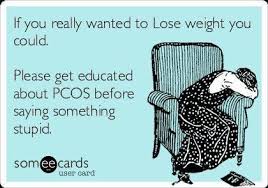
 Compassionate, Kind and Conscious Fat Management is key to being well for high-androgen women with PCOS.
One of my favorite things about being older is noticing how younger people find new and better ways to meet challenges that we all face. I’m especially happy about a greatly increased body acceptance among young people. I do not mean to diminish the suffering I know most of us feel regarding what we think of as our not-perfect bodies. But I note younger people seem more accepting and more comfortable with a wider range of body sizes and appearance details than those of my generation were able to accept, without inevitably imposing crippling shame on people who have extra fat. That is wonderful, excellent, healthy social progress!
I know this is not a universal experience, and some of you may be reacting with “WHAT?!? Who is comfortable being fat?!” I know- it is complex, and different in different communities. I think my impression has to do with the vast improvements in how much human diversity we have become used to seeing every day. We now have a more accurate representation of all of humanity shown in popular TV, movies and digital media, rather than the pretty much white-only, slender-only versions we were limited to not so long ago. It’s not a universal acceptance, and mean-hearted bullying and other abuses still do exist. But trust me, attention to shaming, ridicule and abuse of civil rights as the ugly underside of human behavior that needs to be corrected, is massively improved over what we were doing 30 years ago. There has never been a better time to embrace being an UnCommon Woman!
We still have to grapple with the limitations that wearing the bulk of extra fat tissue puts on our agility, physical endurance and long-term health. So, how do we nurture and maintain a healthy, loving acceptance and also commit to and carry through on managing our choices to minimize physical and emotional distress? We have to learn to pay attention, and practice unfailing kindness and compassion for each other and ourselves.[i]
Giving our attention to someone or something is the most powerful and precious gift we can share. Really, nothing is more valuable than our attention; turning our attention to something is the first step in engagement and connection. It is how we get things done. The power of attention is obvious when we check out it’s meaning- words that define attention include care, notice, devotion, thoughtfulness, and to mind. Attention means being conscious or aware of. It is an act of kindness; in fact it is the foundation of kindness. We cannot act in any way that is truly beneficial or effective without first giving attention to what is true. Giving someone or something our attention is an act of courtesy. It implies responsiveness and interest. In order to create change in our lives, we have to be interested in ourselves!
So, how do we use our attention to manage our pesky fat tissue? It’s pretty simple. Notice yourself. Specifically, pay attention to what you do and how you feel as a result. There is some research that shows us how we tend to eat that is different than women who are not blessed with high-androgen bodies, and I will be sharing that data soon. However, the skill that will free you from distress about body size is your capacity to develop a kind-hearted self-awareness. It is not helpful to try to change your behavior until you have become aware of what your current behavior is. [ii]
A little personal story illustrates this. When I was in my early thirties and the stress of medical school had taken its toll, I weighed 220 pounds. I was vaguely aware that I ate a lot of chocolate in those days, because it was an easy, portable pleasure I could use to reward myself –frequently- for all my hard work. But I could not ignore that I also knew this chocolate was helping me be fatter than I was comfortable being. Long story short (it wasn’t easy for me to learn this), I began to pay attention. I noticed I always ate chocolate when I felt bad. It always gave me pleasure- for about 30 seconds. Then it was melted, swallowed, gone. And, not only did I still feel bad about whatever the original problem was, now I felt even worse because I just ate chocolate which I “knew” was “bad”… I bet this is a familiar story!
The part that is important is that eventually, thanks to awareness I was developing about the fact that when I felt bad and ate chocolate, I still felt bad, I began to pause. I began to thoughtfully consider whether eating the chocolate was really what I wanted to do. Yep, it was, lots of times. But gradually I became more interested in effective problem solving, and had to admit chocolate just wasn’t an effective solution to my long-term suffering from excess fat.
Practicing being kind to myself included not beating up on myself for eating chocolate, or for taking a long-ish time to act like I understood that chocolate was not actually helping me. But kindness really helped me. I began paying attention to how I felt after I did other things, besides eat chocolate, and essentially expanded my toolbox for responding compassionately to my own distress. Eating much less chocolate rolled into noticing other things that worked or didn’t work, whenever my intention was specifically to feel well. Prioritizing feeling well, acting kindly toward myself, and eating foods that served those two priorities became the engine with which I powered through losing 80 pounds.
Good attention and reliable compassion for myself is how, 25 years later, that fat is still gone. I am going to continue to share more on this really important part of living well as an UnCommon woman over the upcoming weeks. If you are in a hurry, and want personalized recommendations to accelerate your own kindness and compassion revolution, visit me at www.PCOSConsultations.com, and we can get started!
Walking with you to joy, peace and a fulfilled life,
Nan
References:
[i] Aphramor: Validity of claims made in weight management research: a narrative review of dietetic articles. Nutrition Journal 2010 9:30.
[ii] Schaefer JT, Magnuson AB. A review of interventions that promote eating by internal cues. J Acad Nutr Diet. 2014 May;114(5):734-60. doi: 10.1016/j.jand.2013.12.024. Epub 2014 Mar 14.
Leave a Reply
You must be logged in to post a comment.