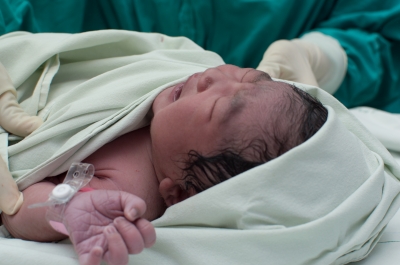
Recent headlines boomed the news of a beautiful baby boy born to a young couple in their early thirties. This couple experienced two failed attempts at traditional IVF, then found success through a process being sold under the name Augment, from the biotech company OvaScience. Women with PCOS often struggle to have babies when they want to. That is, we can be what is called “sub-fertile”. We tend to successfully conceive and give birth later in life rather than in our teens or twenties. Especially if a family of many more than one or two children is your desire, getting a later start may not be something you want to accept. Technological solutions to fertility problems are widely available. It’s a big business, very profitable for owners and typically quite emotionally and financially costly to suffering couples.
The recent excitement is about the role of mitochondria in oocyte (the cell the mom contributes to baby-making) health. Mitochondria are the energy-producing engines in our cells. With aging, all of our mitochondria begin to slow up, including those in a woman’s ovaries. There are rare genetic diseases that affect mitochondria as well. The Augment technology harvests mitochondria from a woman’s own cells and injects it into her own mature egg along with sperm. An embryo that results is then transferred to her womb via traditional IVF. This is the technique that has produced one live baby boy who is so far apparently healthy. There are about ten other women around the world who are currently pregnant via this technique, in Canada, Turkey and the United Arab Emirates. The US FDA does not sanction this technology at this time. OvaScience reports 26 women have been treated, 17 embryos were created and of these, 9 resulted in “clinical pregnancies”. That means 9 transferred embryos successfully implanted and began to develop in mom’s uterus. Presumably we will hear about the results of these pregnancies by next year.
A second, similar technology was designed to help families with rare genetic disorders of mitochondria. It works by trading nucleus material from the mom into a donated egg with functional mitochondria, mixing with dad’s sperm and planting the resulting 3-parent embryo by the usual IVF procedures. Called mitochondrial replacement therapy, this procedure is legal in the United Kingdom, but is controversial. We have many questions to ask and answer regarding the consequences of being a person with three genetic parents- mom, dad and the donor. The FDA halted the use of a similar technology in 2001, after it had been used experimentally without approval. Before the FDA acted, 17 children were born. Now teenagers, most but not all are reported to be healthy so far. One was diagnosed at 18 months with Pervasive Developmental Disorder, which occurs in 1 out of 500 births generally. Bizarre as it sounds, we now have 17 human experiments, living out their lives. Eventually we will have more information, including about the development of genetically based health problems resulting from being the child of 3 parents, as this little group ages.
Meanwhile, what does this all mean for you? Sub-fertility in younger women with PCOS may or may not be related to mitochondrial function. However all humans, including women in their thirties and forties who desire pregnancy, will have mitochondria that are slowing down. Is there something we can do about that? I think so! Next week I will share information about natural therapies that can support your cellular health, with important body-wide benefits, including ovarian health.
Walking with you in joy and PEACE!
Nan
Resources:
- Couzin-Frankel, Jennifer Controversial fertility treatments focus on egg’s power plants. http://news.sciencemag.org/biology/2015/03/controversial-fertility-treatments-focus-eggs-power-plants
- Barritt J, Willadsen S, Brenner C, Cohen J. Cytoplasmic transfer in assisted reproduction Hum Reprod Update 2001 Jul-Aug;7(4):428-35
Leave a Reply
You must be logged in to post a comment.