Hello UnCommon Woman! Here is your Weekly Wellness Guide ~
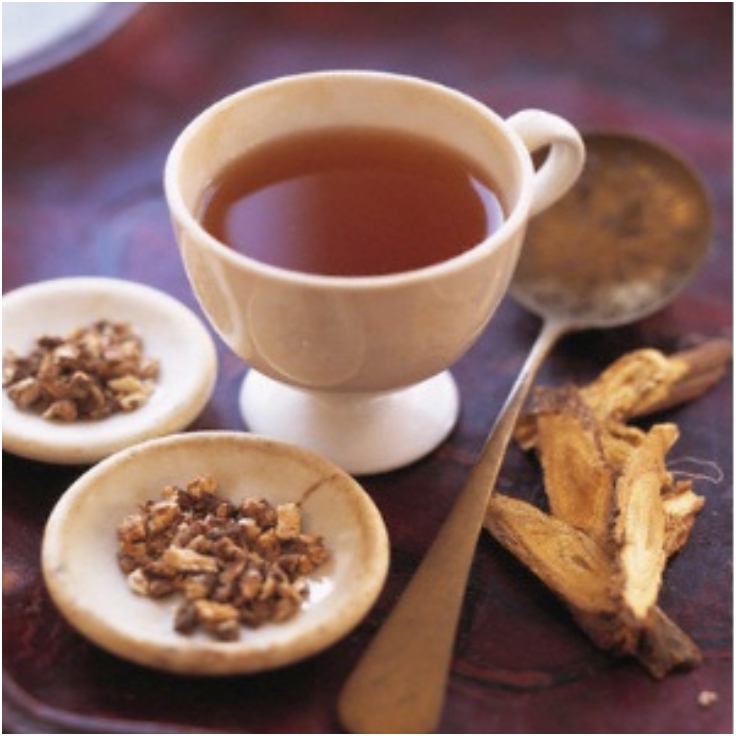
Herbal medicines are powerful allies that can help us moderate our hormone levels. A powerful androgen hormone effect is a consistent feature of women with PCOS. Licorice root (Glycyrrhiza glabra) is a particularly potent natural anti-androgen. I like it because it can be taken in a variety of ways, including as a very inexpensive but definitely medicinal cup of tea. One teaspoon of chopped root simmered 5-10 minutes, cool and strain. It is tasty both warm or cold; I love iced licorice tea!
Two recent studies examined the androgen lowering effects of Glycyrrhiza Glabra. One showed reduced testosterone in healthy women aged 22–26 years when taken through two menstrual cycles. The women in this study used 7 grams per day and their testosterone reduced from 27.8(±8.2) to 17.5 (±6.4). Another clinical trial investigated the effects of Glycyrrhiza glabra in women with PCOS. Glycyrrhiza glabra 3.5 g per day was added to the anti-androgen pharmaceutical treatment, Spironolactone 100 mg/day over two menstrual cycles. An unwanted side effect for Spironolactone is the flare of androgens during the first phase of treatment. This study demonstrated that women taking Glycyrrhiza glabra along with their Spironolactone had significantly lower concentrations of testosterone during the first four days of treatment than the group of women taking the Spironolactone alone.
Licorice root is also anti-inflammatory and we know that women with PCOS have a strong tendency to have at least slightly swollen tissues, a circumstance that contributes to fertility issues as well as cardiovascular disease risk. It inhibits tumor formation, which is soothing to any of us concerned about our very small risk of endometrial cancer. Licorice supports the adrenal hormone cortisol to last longer in our systems, a great support for those suffering adrenal-related fatigue. One component called glycyrrhizin activates our liver to remove toxic xenobiotics, those environmental pollutants we know are contributing to our hormonal distress.
Care must be taken with licorice root. Like all powerful chemicals, it has some potential to do harm, if not used correctly. Monitor your blood pressure; stop using licorice if you notice rising BP, swelling, dizziness or headaches. Ideally you are all working with a licensed naturopathic physician. NDs are the only physicians whose education includes medical botany. Our clinical experience using herbal medicines is both extensive and exclusive. A ND can tell you if your condition is something that can be safely and effectively treated with herbs, and how. Please do contact me if you have questions about using herbs, especially if you are considering combining herbs or other natural medicines along with prescription drugs. I am also available to help you analyze the potency or quality of the supplements or botanical medicines you are using. There are advantages to working with a licensed professional that are not available with other types of advisors. I am proud to say my devotion to your well being includes a massive investment in education and accountability that insures you are both well served and protected from harm. Consider a consultation with me, or, locate a ND near you! Go to www.naturopathic.org, and search with the Find A Doctor feature you’ll see on the home page menu bar. Or, contact me, I might be able to make a personal recommendation!
Resources:
- Arentz S, et al. Herbal medicine for the management of polycystic ovary syndrome (PCOS) and associated oligo/amenorrhea and hyperandrogenism; a review of the laboratory evidence for effects with corroborative clinical findings. BMS Complementary and Alternative Medicine 2014, 14:511
- Kao TC, Wu CH, Yen GC. Bioactivity and potential health benefits of licorice. J Agric Food Chem 2014 Jan 22;62(3):542-53
- Fu Y, Chen J, Li YJ, Zheng YF, Li P. Antioxidant and anti-inflammatory effects of six flavonoids separated from licorice. Food Chem 2013 Nov 15;141(2): 1063-71
- Office of Technology Assessment, Unconventional Cancer Treatments, Chap. 4 “Herbal Treatments”, pp 66-87, Congress of the U.S. Washington, D.C. 1990
- Bisset, et al. Herbal Drugs and Phytopharmaceuticals. Stuttgart 1994 Medpharm Scientific Publishers.
Leave a Reply
You must be logged in to post a comment.